

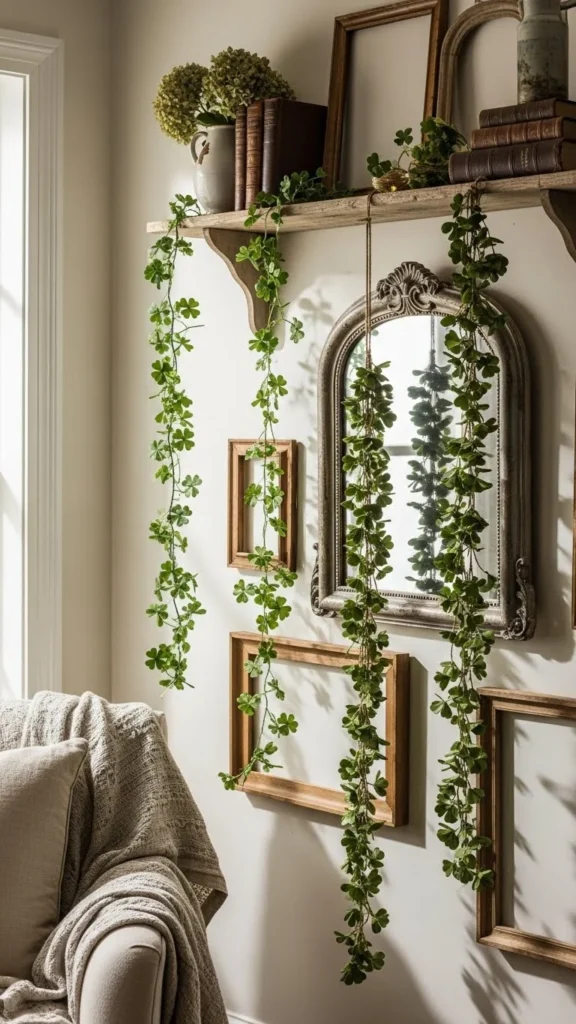
Clover garlands have become a go-to choice for seasonal wall decor that feels playful, warm, and easy to change out. People search for clover garlands because they want something festive without committing to bulky decor or permanent changes. These ideas focus on simple materials, renter-friendly setups, and styles that work far beyond one holiday. Whether you enjoy crafting or prefer quick store finds, these garlands show how a small detail can shape the mood of an entire room.
1. Classic Paper Clover Garland

Paper clover garlands remain a favorite because they are easy to make and cost very little. You can cut clovers from cardstock, scrapbook paper, or even recycled gift bags. Use different shades of green to avoid a flat look. String them with twine or thin jute for a relaxed feel.
Spacing matters. Leave small gaps between clovers so the wall shows through. This keeps the display light instead of crowded. If you want more texture, lightly bend the paper petals before stringing them.
Budget tip. Use a single hole punch and yarn you already have. This setup works well above sofas, shelves, or desks. When the season ends, fold the garland flat and store it in an envelope for next year.
2. Felt Clover Garland With Soft Texture
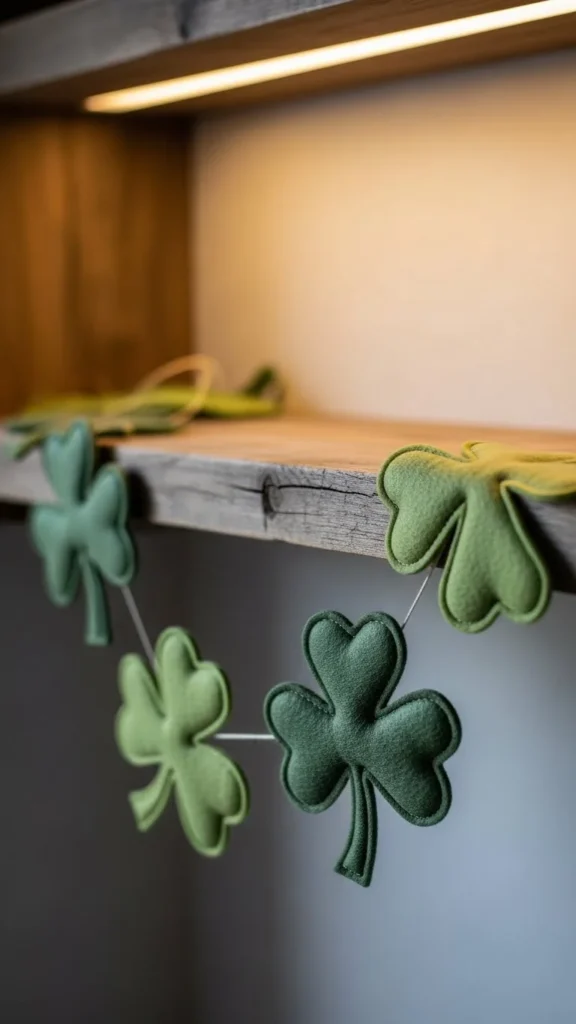
Felt clovers bring softness to walls that feel plain or stark. Pre-cut felt shapes save time, but cutting your own allows custom sizing. Choose felt that feels thick so it hangs neatly without curling.
Attach the clovers using embroidery thread or baker’s twine. Neutral string helps the shapes stand out. This style pairs nicely with wood furniture and woven accents.
DIY tip. Mix solid felt with lightly speckled felt for subtle variety. Felt garlands also last longer than paper, making them reusable year after year. Hang them with removable hooks to protect paint.
3. Mini Wood Clover Bead Garland
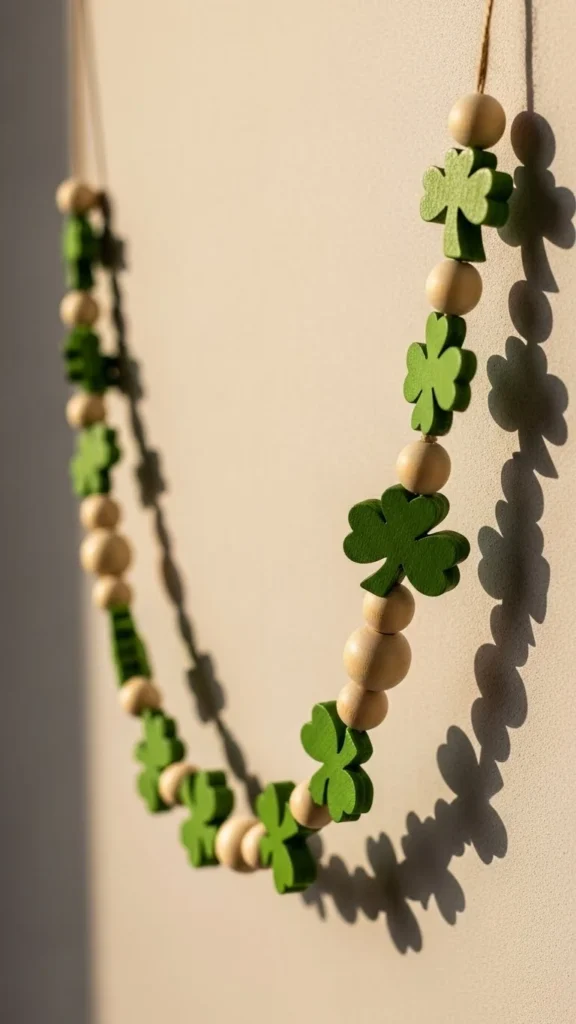
Wood bead garlands feel calm and grounded. Add small clover cutouts between bead sections to give the piece a seasonal touch without overpowering the wall. Natural wood works well with farmhouse or neutral decor.
Use fishing line or thin cord for a clean look. Keep the length shorter so the weight stays balanced. This style works best on hooks or small nails rather than tape.
Budget tip. Paint unfinished wood clovers using craft paint. Light sanding after drying adds a worn look that feels cozy rather than polished.
4. Fabric Scrap Clover Garland
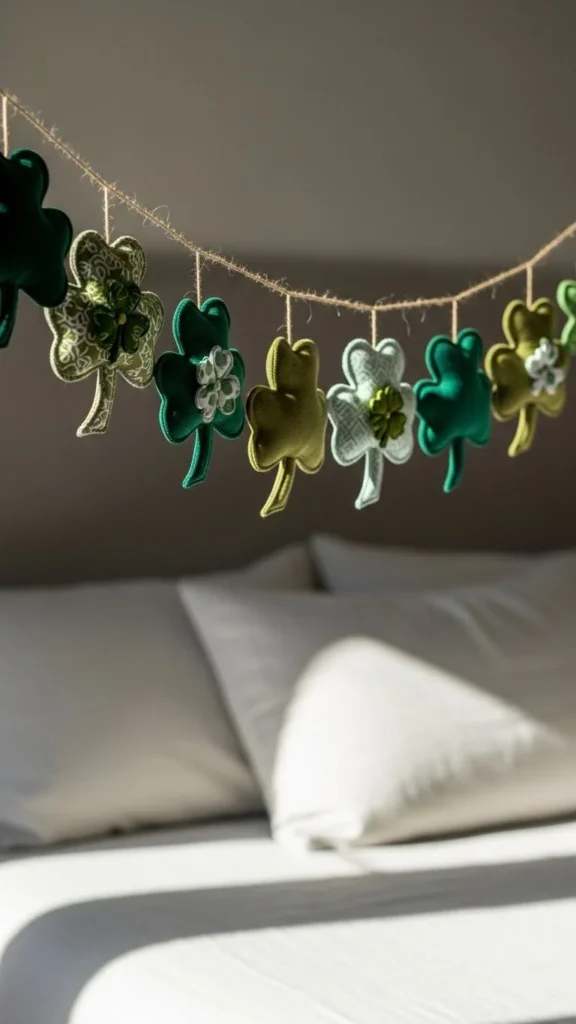
Fabric scrap garlands give new life to leftover material. Use cotton, linen, or old clothing. Slightly frayed edges add charm and hide uneven cuts.
Sew or glue the fabric onto backing shapes for structure. String with twine to keep the style relaxed. This works well in bedrooms or craft rooms.
Cost saver. This project uses materials many people already own. Mixing prints keeps the look casual and prevents the wall from feeling stiff.
5. Crochet Clover Garland
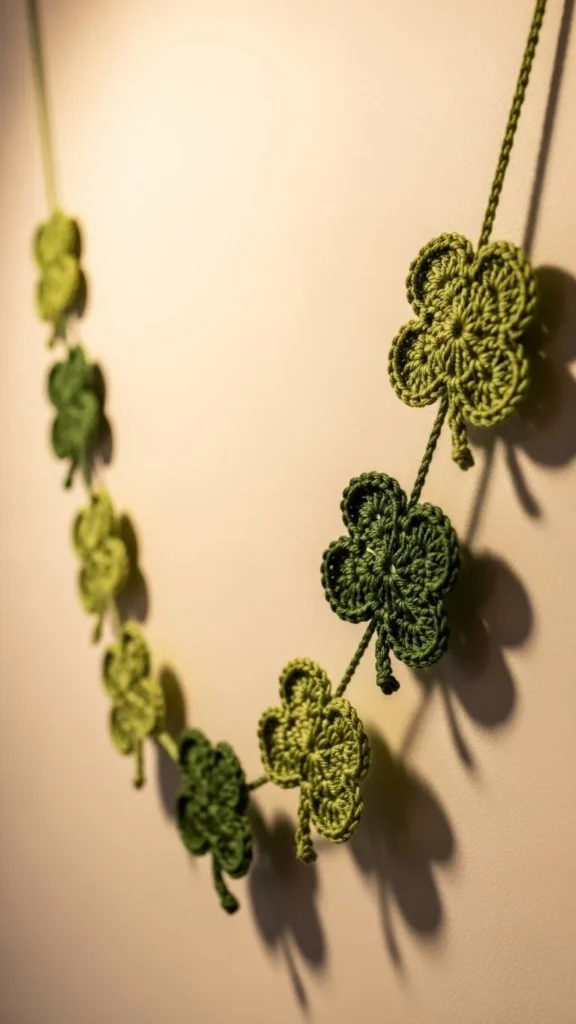
Crochet clovers bring handmade character to any space. Small clover motifs work best so the garland stays light. Choose cotton yarn for clean edges and durability.
This style fits well in kitchens, reading corners, or nurseries. Neutral string helps the shapes stand out without visual clutter.
Tip. If crochet feels intimidating, try simple patterns with just a few stitches. One afternoon can produce enough clovers for a full wall span.
6. Painted Burlap Clover Garland
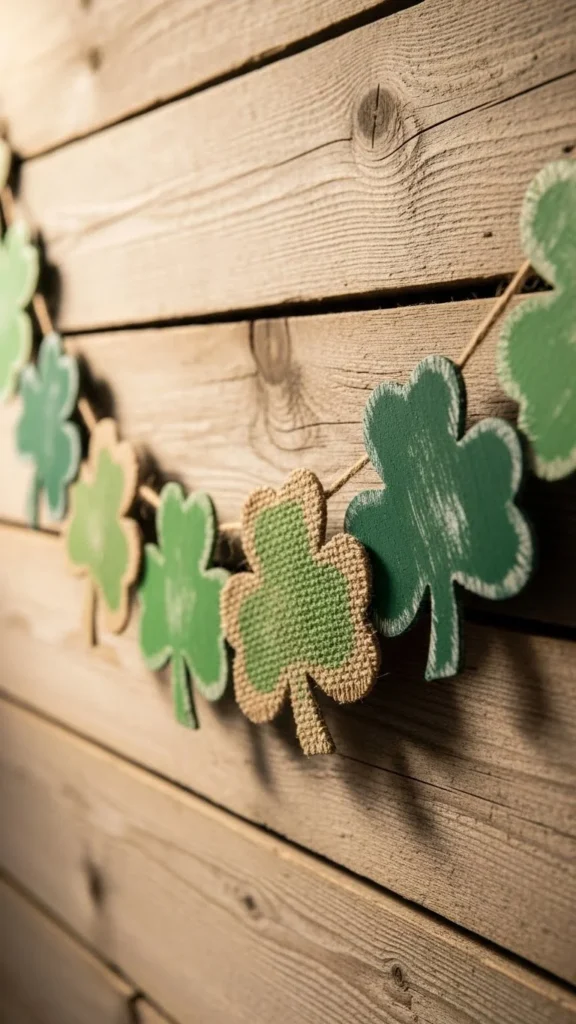
Burlap offers texture that feels rustic and relaxed. Cut clovers slightly larger than usual since burlap edges fray. Paint clover shapes using a sponge to avoid harsh lines.
Hang the garland loosely so it drapes naturally. This style works well in entryways or near coat racks.
Budget idea. Burlap ribbon is often cheaper than fabric by the yard. A single roll can make several garlands.
7. Minimal Line-Drawn Clover Garland

Line-drawn clovers offer a clean look for modern homes. Use white or light green cardstock and draw outlines with fine markers. Keep spacing even for balance.
This style pairs well with framed art or floating shelves. It adds a hint of seasonal charm without overpowering the wall.
Quick tip. Print outlines and trace them onto thicker paper to save time.
8. Layered Paper Clover Garland
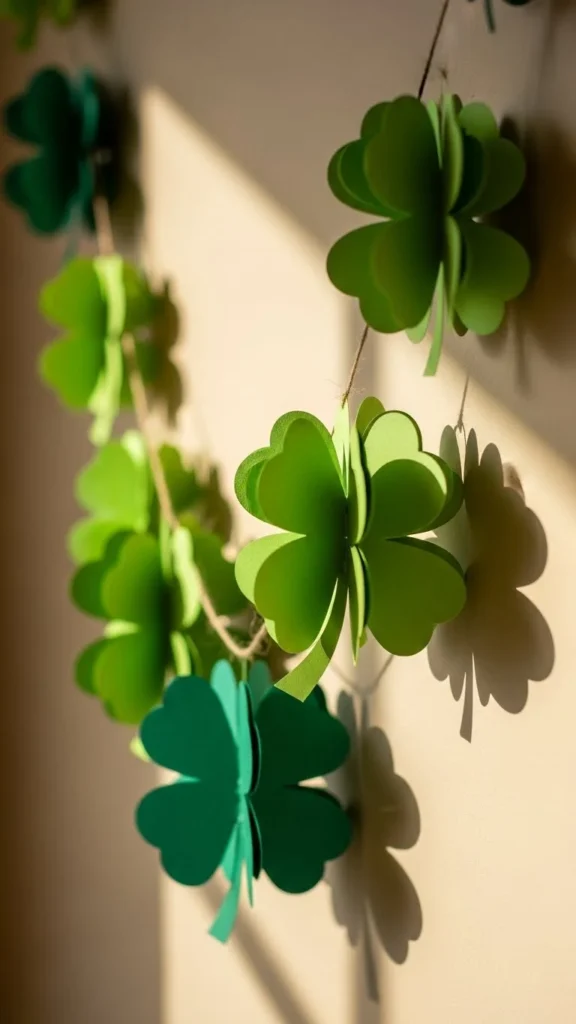
Layering adds dimension without extra cost. Stack two or three paper clovers slightly offset and glue at the center only. This creates gentle movement.
Hang with clear thread so the shapes appear to float. This works well in small rooms where heavy decor feels overwhelming.
Tip. Use leftover paper scraps for the top layer to stretch supplies further.
9. Gold-Edged Clover Garland
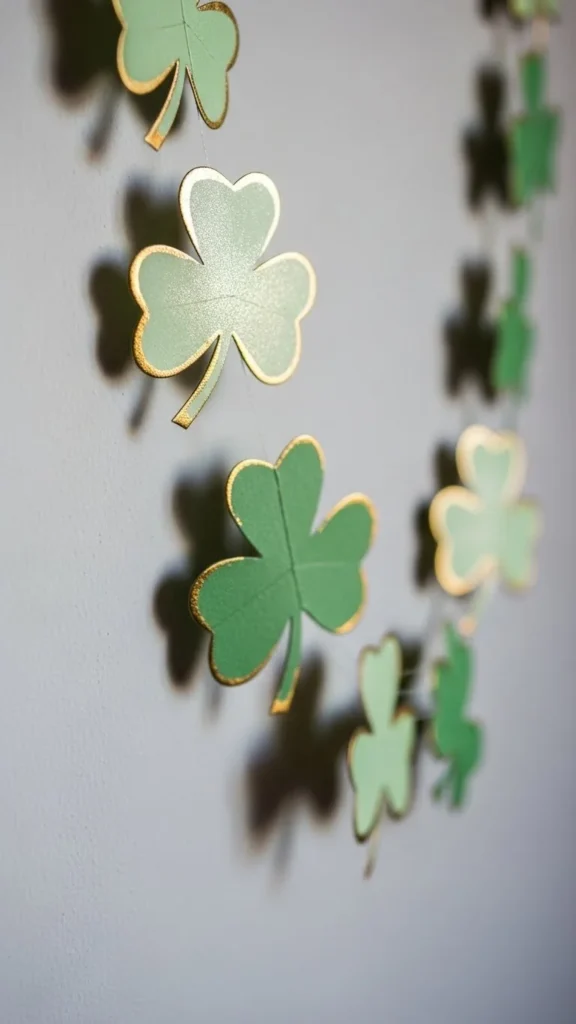
Gold edging adds contrast while keeping the design simple. Use a paint pen or small brush to trace edges lightly. Avoid heavy coverage so the clovers stay balanced.
This style works nicely in dining areas or home offices. Keep the garland shorter to maintain a refined look.
Budget note. A single paint pen lasts through multiple projects.
10. Mixed Green Tone Garland
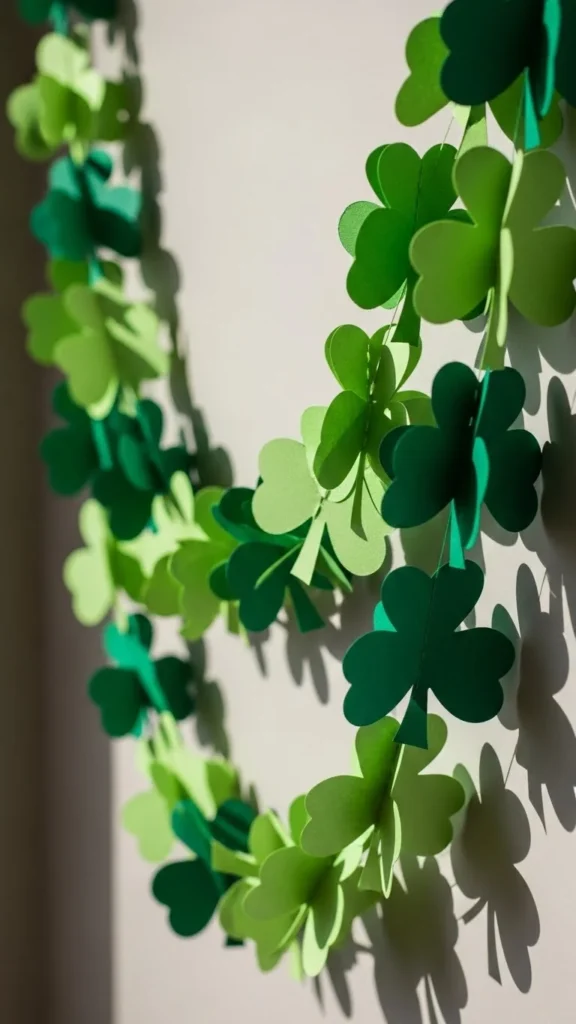
Using several green shades adds depth without extra materials. Cut clovers in different hues and arrange them randomly before stringing.
This approach works well on large walls where one color feels flat. It also pairs easily with existing decor.
Tip. Use paint sample cards for free color variety.
11. Pressed Leaf Clover Garland
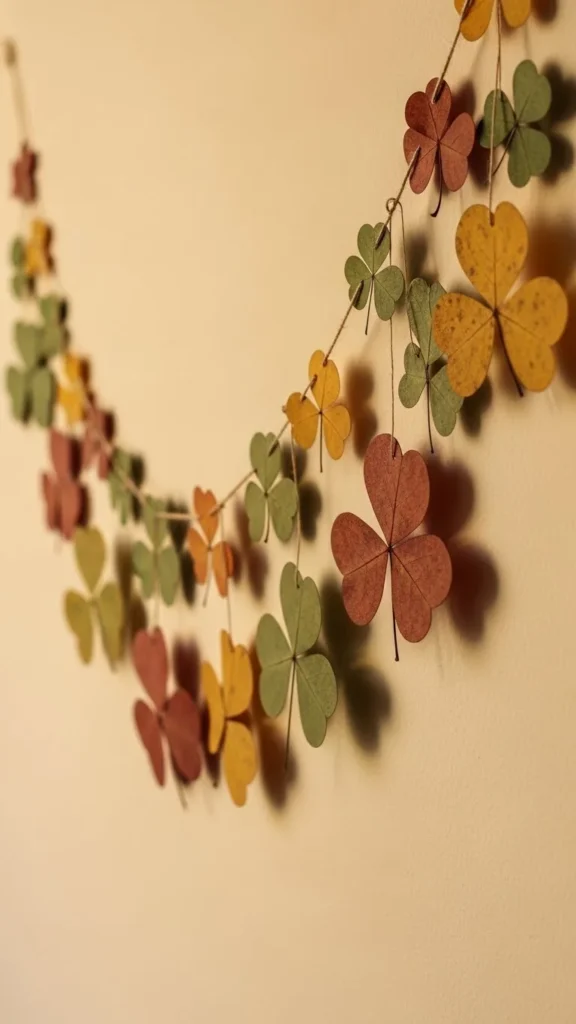
Pressed leaves create a natural look that feels calm. Shape the leaves into clover forms using cardstock backing. Allow them to dry fully before stringing.
This garland suits sunrooms or spaces with plants. It blends easily with greenery already in the room.
Cost saver. Collect leaves during walks and press them between books.
12. Ribbon-Tied Clover Garland
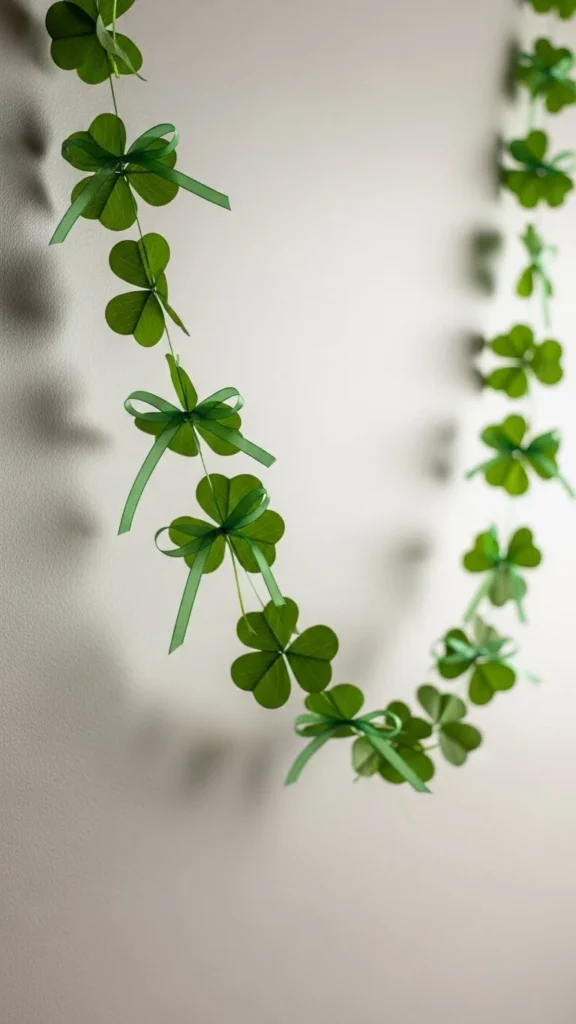
Ribbon ties add movement and softness. Attach each clover with a loose knot instead of glue. This allows easy adjustments later.
Use ribbon scraps from gift wrapping. Keep the bows small to avoid bulk.
This style fits well above mirrors or along stair railings.
13. Rustic Twine Clover Garland
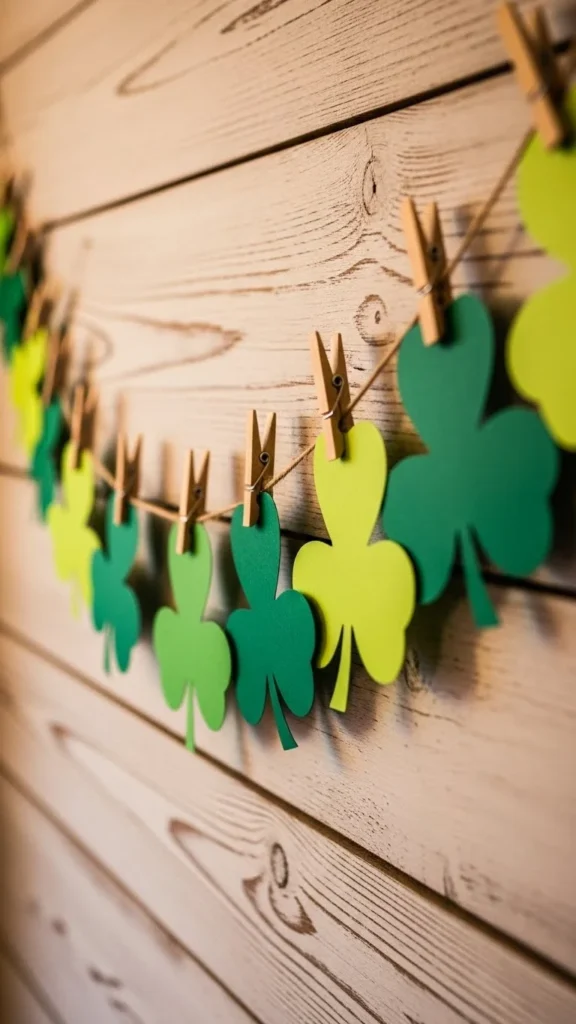
Twine keeps things simple. Clip clovers using mini clothespins so you can swap designs anytime. This setup works well for frequent seasonal changes.
Tip. Paint clothespins white or green for a cohesive look.
14. Oversized Statement Clover Garland
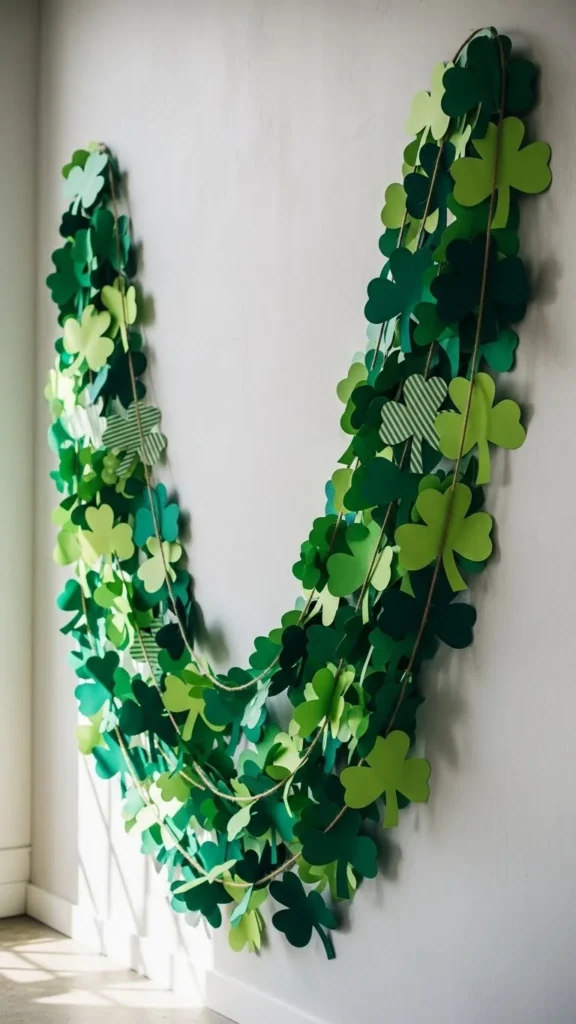
Large clovers make an impact without many pieces. Space them widely to keep the wall from feeling crowded.
This style works best on blank walls behind sofas or beds. Fewer pieces also mean faster setup.
Budget idea. Use poster board instead of specialty paper.
15. Floating Clover Garland
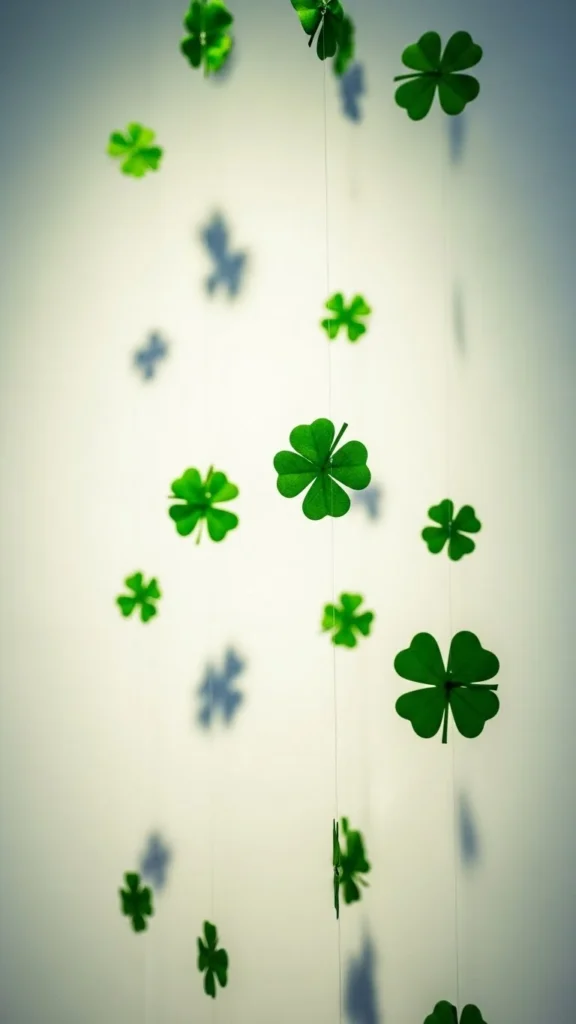
Clear thread creates a floating effect that feels light. Vary heights slightly to avoid straight lines.
This design works well near windows or light-filled rooms. Use removable hooks for easy cleanup.
16. Kids’ Art Clover Garland
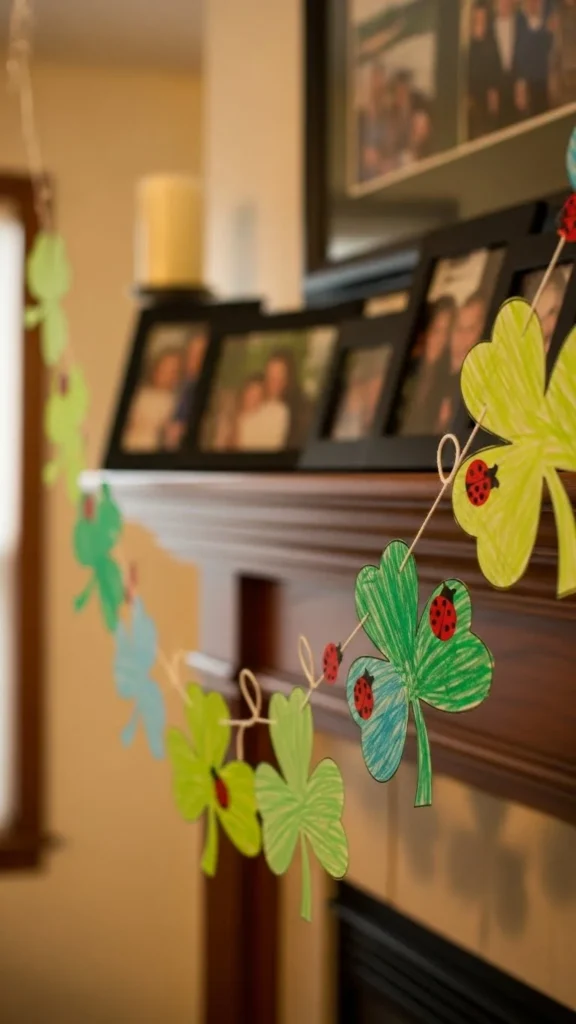
Use children’s drawings as clovers for a personal touch. Trace their art onto cardstock for consistency.
This idea suits playrooms or kitchens. It adds meaning without spending money.
17. Neutral Fabric Clover Garland
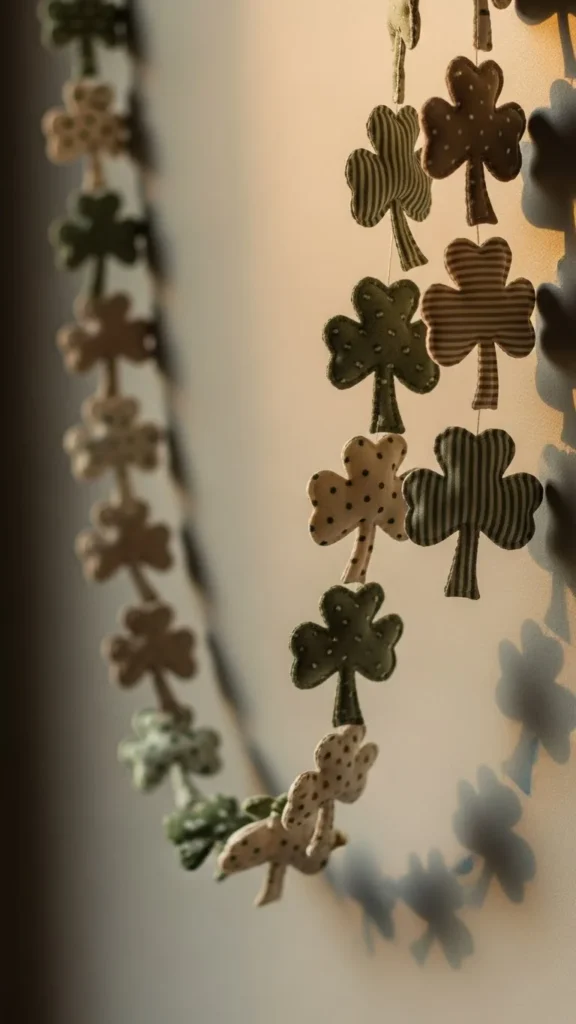
Neutral fabrics keep things subtle. Linen or muslin works well. This style blends easily with everyday decor.
Use hand stitching for durability. Keep clovers small to maintain balance.
18. Chalkboard Clover Garland

Chalkboard paper offers contrast. Leave clovers plain or lightly rub chalk dust for texture.
This style fits modern or casual spaces. Pair with white walls for clarity.
19. Farmhouse Button Clover Garland
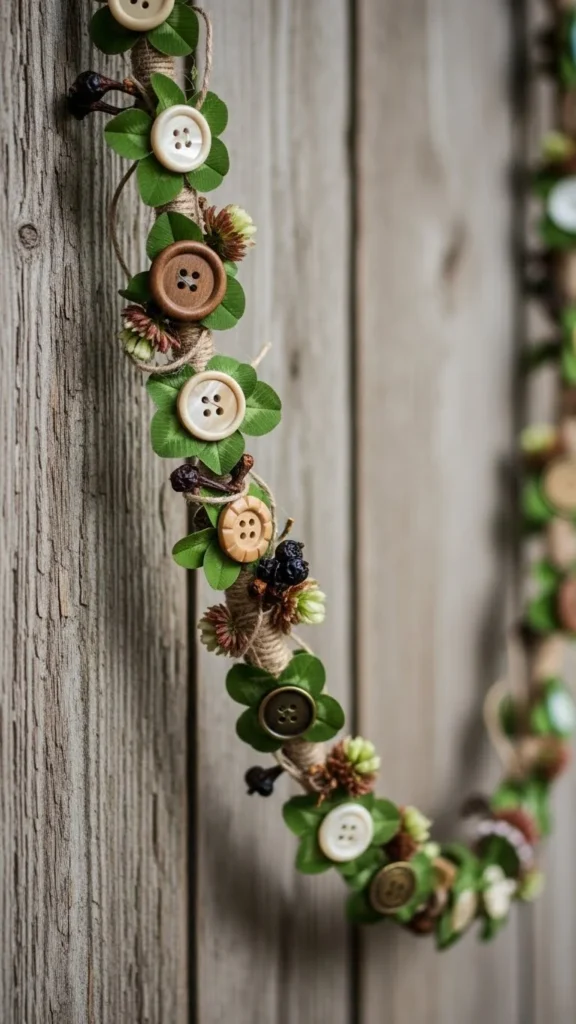
Buttons add charm using items already on hand. Glue one button at the center of each clover for detail.
This works well in laundry rooms or craft spaces. Keep button colors simple for cohesion.
20. Paper Doily Clover Garland
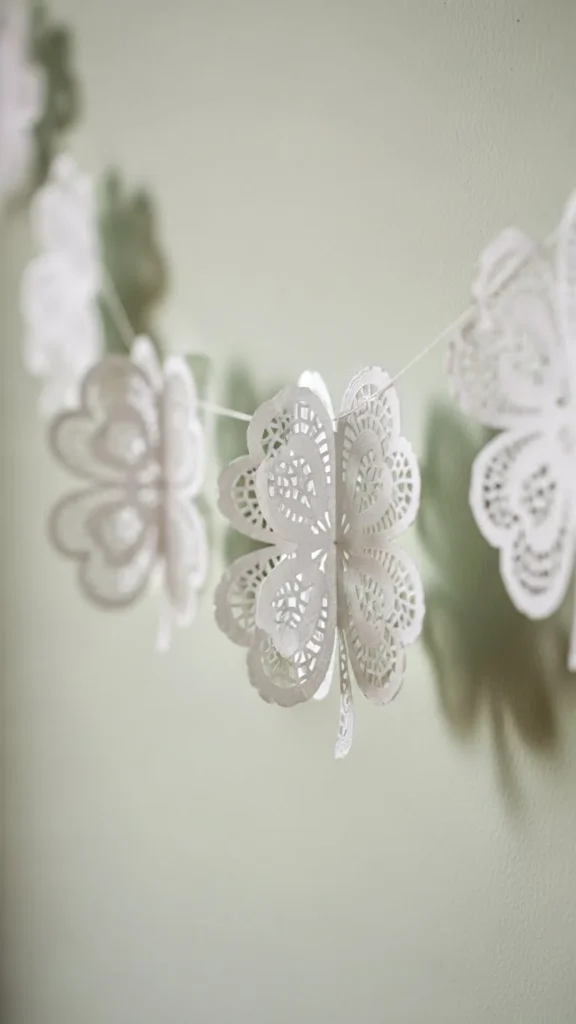
Paper doilies create lace-like clovers. Layer them on cardstock for strength.
This style feels light and decorative. Hang it where gentle detail stands out.
21. Wall-Length Clover Garland
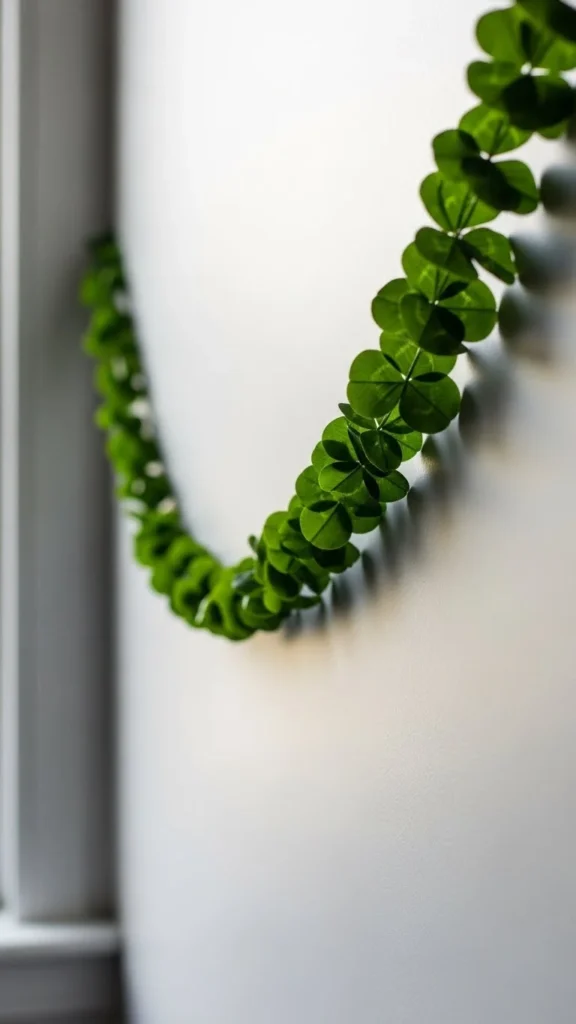
Full-length garlands frame walls nicely. Keep spacing consistent for order.
Use lightweight materials to avoid sagging. This suits large living rooms.
22. Mixed Material Clover Garland
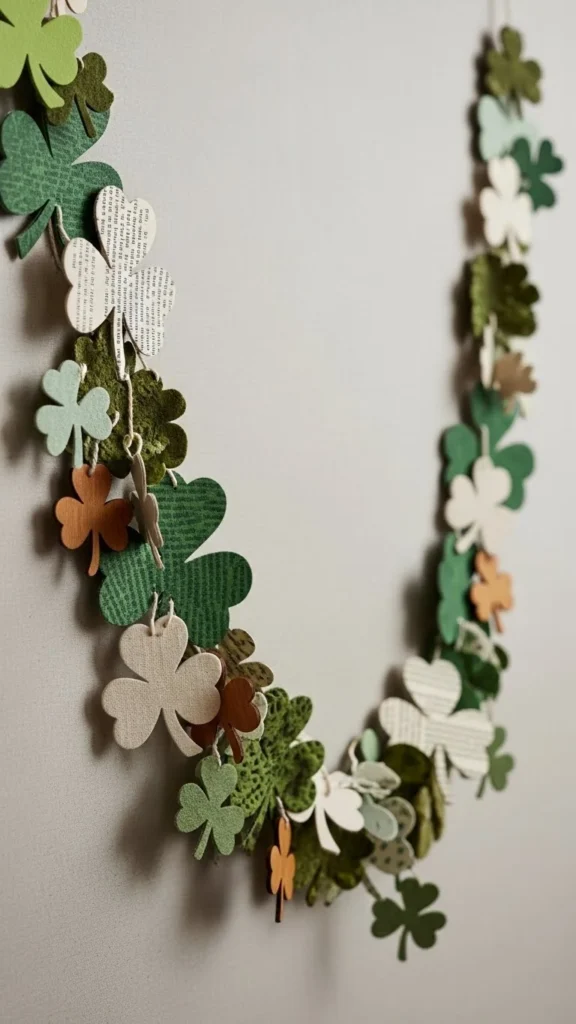
Mixing materials adds depth. Alternate paper, fabric, and wood clovers.
Stick to one color palette for balance. This keeps the wall from feeling busy.
23. Hanging Clover Swag Garland
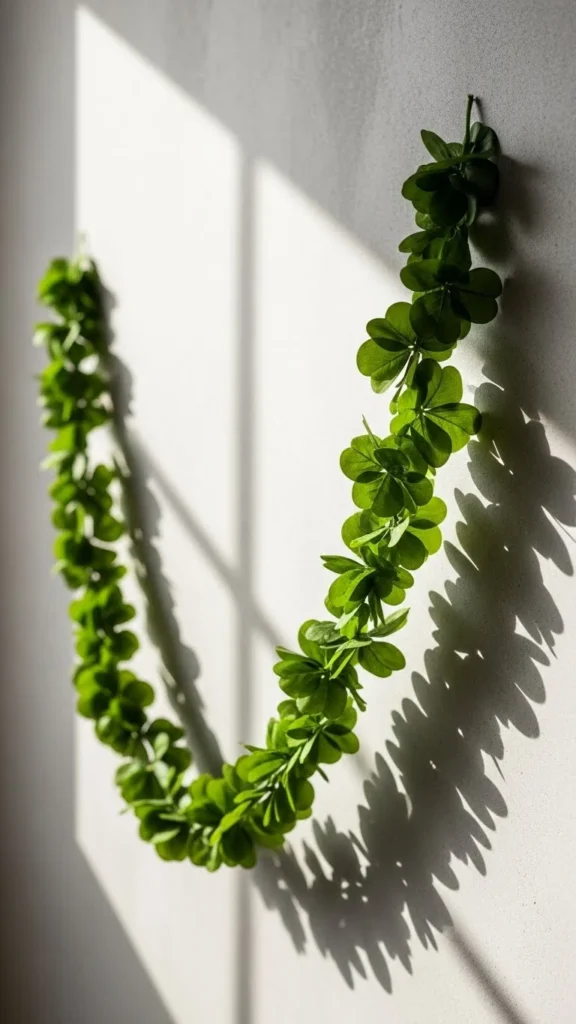
Swag shapes soften straight walls. Use longer string and let gravity guide the curves.
This style looks great above fireplaces or headboards.
24. Monochrome Green Clover Garland
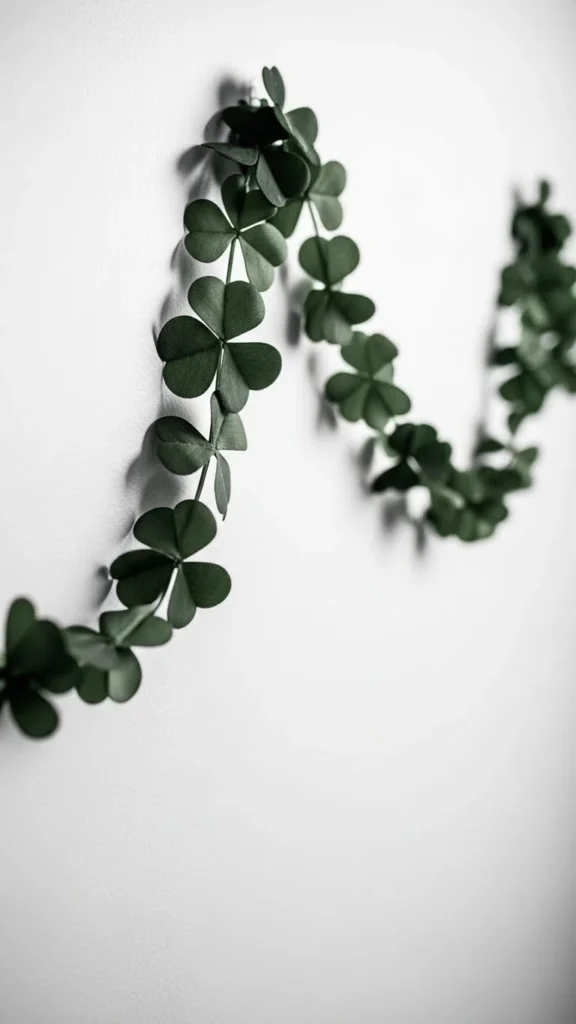
One color keeps things calm. Use texture instead of color variation.
Perfect for minimalist homes wanting seasonal detail.
25. Framed Clover Garland
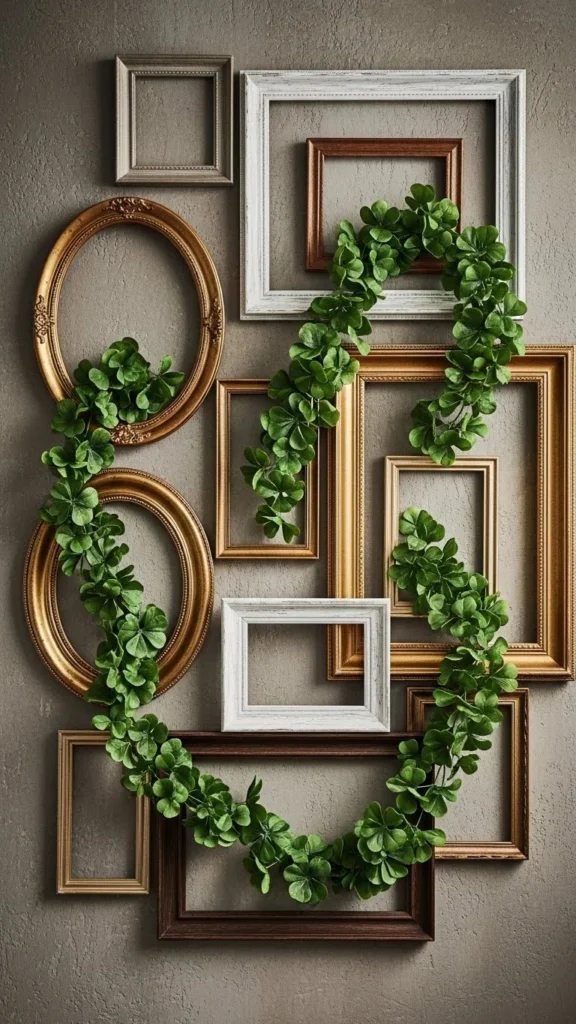
Use empty frames to guide placement. Drape garlands inside frames for structure.
This approach adds interest without new wall holes.
26. Doorway Clover Garland
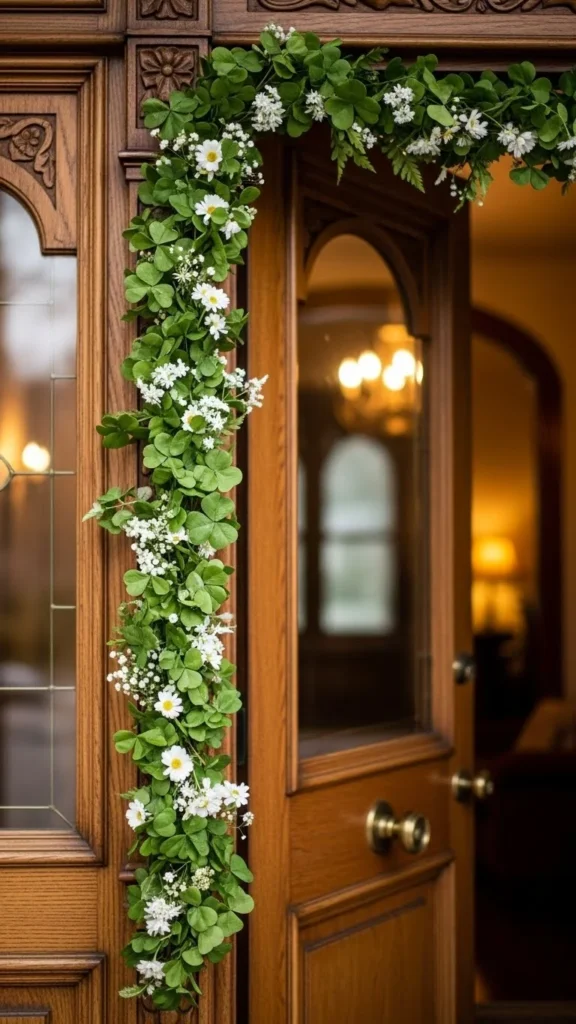
Doorway garlands define spaces. Keep clovers flat so doors move freely.
Use removable hooks for easy removal.
Conclusion
Clover garlands prove that wall decor does not require expensive materials or complicated steps. With paper, fabric, wood, or simple string, each idea shows how small details can shape a room’s mood. Pick one style or combine a few to match your space. Save your favorite idea and try one this season to give your walls a simple, welcoming update.

Leave a Reply